Blog

Share to:

Quality Control: The Key to Keeping your Housekeeping Issues under Control

What is Quality Assurance in a large-scale custodial contract?

Quality Commercial Housekeeping is kind of like following a litter of Golden Retrievers pups around, trying to keep the fur shed under control. The larger your house and the more dogs you have, the harder it is to keep on top of the shed.

The larger your facility, the more custodians you’ll need. And if it’s a high-traffic location (mall, school, airport passenger terminal), or an acute care setting (such as a hospital), then you’ve got an industrial-scale version of chasing those dogs around with a sweeper and a dustpan – you’ll never finish the job and after awhile you’ll never know if you’re gaining (or losing) ground in the battle.

Enter Quality Assurance (QA)

In order to maintain a consistently clean facility (click here for the definition of what Clean really means) Quality Assurance (or Quality Control) must be rooted in your housekeeping supplier’s DNA. It requires a top-down commitment, a positive culture, dedicated employees, rigid and effective procedures, reliable equipment (maintained properly), consistent training, frequent and thorough facility inspections and re-inspections, and a tech-driven system for review, response, and necessary action.

A QA program is much more than a job checklist. It includes a system for quality issue resolution, employee performance management, and a process for identifying and correcting performance problems.

Just ask Mike Stenson, Deputy Airport Director at Destin-Fort Walton Beach Airport (VPS) in Destin, Florida, and a Service Management Systems custodial customer, what he thinks about the importance of keeping on top of QA in a 24/7 airport passenger terminal environment.

“SMS has over 20 years of airport experience and provides for quality leadership from the frontline Supervisors, to the Manager and Divisional Managers and Vice President. All levels are very responsive to our requests and phone calls. I also like the (OPS360) app that is used to notify SMS Management of an area within the Airport that needs attention and one can attach a photo of the area.”
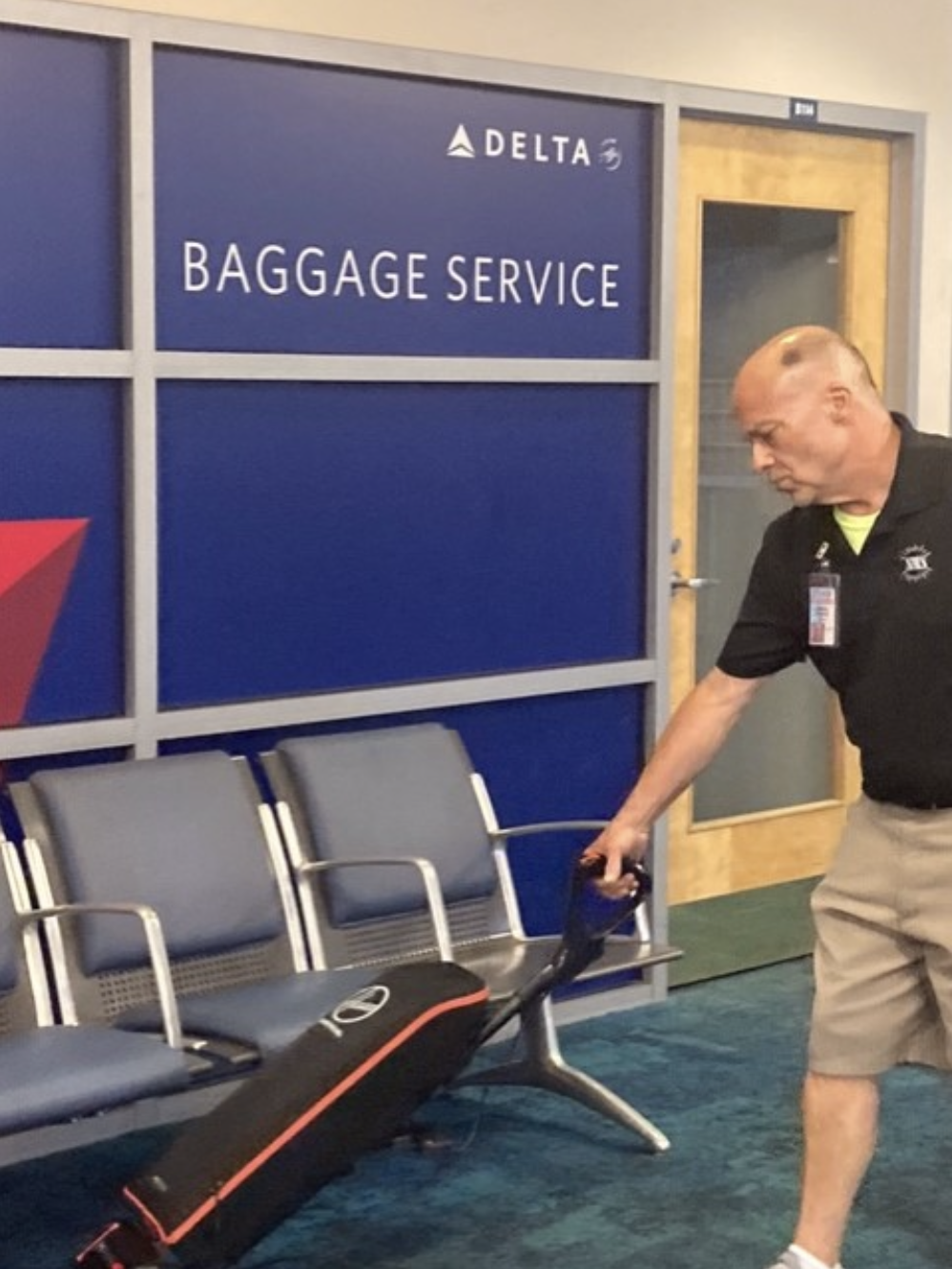
Quality Assurance begins with Quality Janitorial Employees

The right QA system not only keeps your visitors safe and gives your housekeepers direction, but it has a positive impact on your bottom line. Whether it’s a consumer deciding between shopping online or going to the mall, a teacher deciding if they want to renew their school contract next year, an airline passenger visiting your city for the first time, or a hospital patient at high risk to germs – you want them coming back again, or giving you a high score on their HCAHPS survey.

Certain elements are integral to providing your facility with a successful QA program, and we’ve identified seven keys to keeping your issues under control:

1. RECRUITMENT, HIRING, AND RETENTION – FINDING AND KEEPING THE RIGHT EMPLOYEES

At SMS, we believe in hiring for talent and personality, and then training the right people on their role’s skills, techniques, and duties. Then we work to retain staff through fair wages, benefits, a positive team culture at each facility, and a philosophy of promoting from within the organization.

2. TRAINING AND A COMMITMENT TO CONTINUOUS RETRAINING

At SMS, we have a deep list of training topics and a thorough training program that includes video, written, smart device, and on-site hands-on training, allowing each employee to learn in different ways and through the methods that are most effective for them. We run monthly training topics on Safety and Culture and provide scheduled retraining.

3. GETTING TO KNOW YOUR FACILITY AND JOB DUTIES

Nothing beats training through hands-on experience with manager feedback. Our facility managers and everyone on the SMS leadership team have become quite adept at performing all of the necessary tasks, and that makes for faster and better knowledge transfer to new team members.

4. MANAGEMENT THAT KNOWS HOW TO INSPECT, FOLLOW A SCHEDULE, AND COMMUNICATE

When a manager or supervisor has the right experience, knowledge, tools, and technology, it becomes much easier to follow an effective inspection schedule. It’s necessary to hire managers who know how and when it’s important to communicate with their employees and with contacts at your facility. We believe it’s better to report a problem immediately and deal with it, rather than brush that dog shed under the rug.

5. THE RIGHT TECHNOLOGY

SMS utilizes OPS360 – a custom-designed mobile app-based technology that allows both SMS Management and our customers to monitor our service quality at any given time. The program focuses on transparency, accountability, analytics, real-time data, and collaboration for quality control. OPS360 digitally tracks every record for permanent online storage, producing metrics that can be run for any timeline requested, and can be filtered for a broad or narrow facility review.

QA Reporting Related To Specific Rooms/Areas

At SMS, each quality inspection is specific to a selected room/area, because upon contract start, every room of your facility can be inventoried and listed within OPS360 for future inspection. Additionally, these areas are rolled up into layers that allow more specialized reports that cater to the needs of the individual pulling the report.

Access to Information – Customer and Janitorial Management Receive the Same Timely Data

All feedback is rated and immediately stored digitally within OPS360, with follow-up tickets created based on that feedback. Each work order has specific email addresses entered for continued follow-up, and emails are automatically sent to any concerned parties, showing the progress of the assignment, any actions taken, completion of the assignment, and the final results – including pictures of the area and detailed notes of the final inspection.
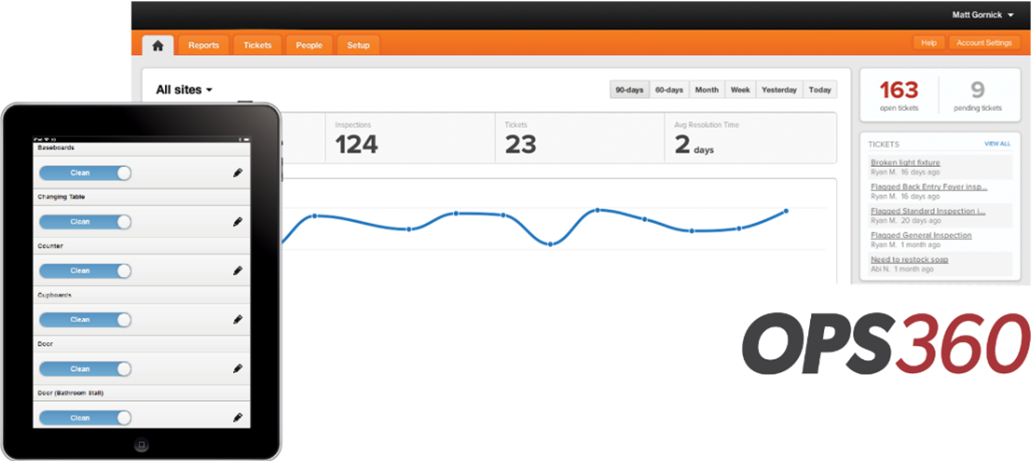
Dedicated QA for janitorial sends real-time data to any mobile device

6. ACTION. COMMUNICATION. RESULTS.

A professional QA Program means that potential trouble spots are identified and inventoried within your custodial firm’s technology, problems are identified right away, appropriate alerts are distributed, and necessary action is taken quickly. All while information is being distributed in a timely fashion to the right people.

7. LESSONS LEARNED

When your janitorial team maintains staff continuity, uses the proper technology, and records past issues, it’s much easier to improve. So, when mistakes happen, the same ones are much less likely to happen again.

Quality Assurance doesn’t just happen. It requires the proper tools, proper implementation, and a top/down group of employees who believe in its value. Whether it’s a litter of new puppies or litter in your public restroom, you need a well-designed QA Program.


To request a Demo of our OPS360 Technology, enter your information and click Submit!

Get Started with SMS

We provide superior specialized services through management of systems and people that allow our customers to focus on their core business. Learn more about how we have fine-tuned our cleaning and maintenance programs to bring your property better results at a better value.

Learn More
Share to:

Clean for Improved Indoor Air Quality

The Pandemic taught us what Clean really means

Your janitorial team has mops and cleaning supplies, works hard, and they smile when you pass them in the hallway. But are they working the right way? Your facilities may “look” clean, but are they actually clean in the ways that matter to public health?

Your team should be utilizing the right processes to reach the goal of stopping the spread of germs, and making your indoor spaces safer for your visitors and the people who work there.

At Service Management Systems, we follow the science and extend the processes, skillsets, tools, and industry standards we exceed in our hospital contracts to all the markets we serve. In order to truly make a difference, we focus on improving Indoor Air Quality (IAQ) in every building we clean. SMS uses high-quality tested equipment and consumables, ongoing research-based training, and a Quality Assurance Program centered around our OPS360 Technology to make sure we clean properly and completely, and are able to quickly identify and correct any issues that may arise.

Our company motto is Whatever it Takes! and nothing is too small to worry about. Beginning with upper management and extending throughout our team, we strive to understand what “clean” really means and teach, train, and execute toward a higher goal: stopping the spread of germs and creating a safer environment that protects the health of your staff and visitors.

Clean for health and Indoor Air Quality, not just appearance

In the blog How Can Cleaning Impact Indoor Air Quality?1, posted May 24, 2021, Andi Curry writes:

“One of the primary issues this pandemic2 has brought to our attention was just how easily viruses can travel in indoor environments. This has led to experts sounding the alarm for better indoor air quality (IAQ) measures and regulations.”

Ms. Curry sees a permanent change in how we look at our definition of “clean” going forward:

“Cleaning can have a massive impact on the indoor air quality of a building—through seemingly simple things like the products we use, how we maintain tools and the processes we use to clean.

It might not seem like a big deal, but if a cleaner vacuums the floor before dusting surfaces, is he or she effectively removing unwanted material from the building?

No.

And that remaining dust impacts IAQ.”

When not done correctly, cleaning can actually harm the health of the people who spend time in your buildings every day.

Too often, custodians clean for appearance when they should be cleaning for health.

In his book, “Protecting the Built Environment: Cleaning for Health,” Michael Berry, Ph.D., writes:

“Health protection was, is and always will be the primary benefit of cleaning.

…A clean environment is sanitary. When a sanitary condition exists, an adverse health effect is unlikely. When environments are not properly maintained, sooner or later they will become unsanitary. There is no doubt about this natural fact.

..When we vacuum a carpet or floor, we usually see particles 40um and larger (a micrometer is 1/one millionth of a meter). When we’re finished, we can look around and feel confident that we have removed particles. And we probably have, but only the large ones. To protect our customers’ health, we must remove particles of all sizes, especially small ones of 10um and less. They are too small to be seen by the eye alone. Small articles call for our best efforts and equipment. Not only are they hard to manage and capture, but they also tend to accumulate over time.”

Poor Indoor Air Quality is similar to a hidden medical condition: you might not be aware of it until it’s too late. If you’re not sure that your custodial team is doing everything possible to protect the health of the people who enter your buildings, reach out to SMS for a survey and consult today.


1How Can Cleaning Impact Indoor Air Quality? – ManageMen
2Covid-19 proved bad indoor air quality makes us sick. We can fix that. – Vox.com

Get Started with SMS

We provide superior specialized services through management of systems and people that allow our customers to focus on their core business. Learn more about how we have fine-tuned our cleaning and maintenance programs to bring your property better results at a better value.

Learn More
Share to:

Why does a Clean School Matter?

A Clean Classroom Improves Student Success and Teaching Quality

Most likely, you chose to become an educator because you want to make a difference in children’s lives. Unless you already were teaching in a fully remote environment, the Pandemic provided evidence of what you probably already knew:

  • Most students learn best through the interactive classroom environment
  • A clean classroom is essential to a high-quality academic climate

But do you know that the definition of a “clean school” is much more than what meets the eye?

Here at Service Management Systems (SMS), we study the science, develop health-first procedures to follow that science, and hire the right people – in an effort to do everything we can to maintain Indoor Air Quality (IAQ) in the buildings we clean. Our goal is to provide students and educators with the best opportunity to maximize the quantity and quality of time spent in the classroom. SMS is a custodial and maintenance company founded in 1988 that specializes in cleaning educational and healthcare facilities, airports, retail and entertainment venues.

We have the professional expertise, tools, and experience necessary to keep an operating room clean, so we should share some of that knowledge to help keep your students safe (and learning) on campus. When put into practice as cleaning objectives at your school, you will be able to maximize the safety of the physical environment in which you educate our next generation of leaders.

Scientific Evidence links Proactive School Maintenance to Improved Academic Performance1

The U.S. Environmental Protection Agency (EPA) released an extensive report (last updated Sept. 14, 2022) detailing the impact of a clean classroom, proper school disinfecting, and clean air on student performance and teaching quality:

Schools without a major maintenance backlog have a higher average daily attendance, by an average of 4 to 5 students per 1,000, and a lower annual dropout rate by 10 to 13 students per 1,000.

Proactive School Maintenance equals Higher Attendance and Lower Dropout Rate

Clean Schools and Classrooms Can Reduce Absenteeism, Improve Test Scores, and Improve Teacher Retention Rates

  • Studies that measure school conditions using an index of several variables consistently show improved scores on standardized tests as school conditions improve.
  • On the other hand, schools with major unmet repair needs and fewer custodial workers per square foot have higher absentee rates and higher dropout rates.
  • Nearly 80 percent of teachers responding to a survey in Chicago and the District of Columbia reported that school facility conditions were an important factor in teaching quality. Almost half who graded their facilities “C” or below would consider leaving. The most frequently cited problem was bad Indoor Air Quality (IAQ).

Benefits of a Clean School Environment

  • Higher Test Scores
  • Increased Average Daily Attendance
  • Reduced Operating Costs
  • Increased Teacher Satisfaction and Retention
  • Reduced Liability Exposure
  • Reduced Environmental Impacts

Clean Schools for health, not just appearance

Poor Indoor Air Quality Causes Illness and Increases School Absenteeism.2

Indoor Air Quality (IAQ) problems can cause increased absences due to respiratory infections, allergic diseases from biological contaminants, or adverse reactions to chemicals used in the cleaning process. Respiratory health issues resulting from problems in school buildings can be caused by:

  • Presence of moisture, water damage, and microbiological pollutants
  • Animal and other biological allergens
  • Combustion byproducts such as nitrogen dioxide
  • Moisture or dirt in HVAC systems
  • Low ventilation rates
  • Formaldehyde
  • Chemicals in cleaning products
  • Outdoor pollutants or vehicle exhaust

Respiratory health effects, such as infections and asthma, are most closely associated with increased absenteeism:

  • In 2003, children with at least one asthma attack in the previous year missed an estimated 12.8 million school days due to asthma
  • Children’s overall performance decreases with illnesses or absences from school
  • Student performance can also be affected when teachers are absent due to illness (even the best substitute teachers may disrupt the learning process, and present an added expense for the school system)


1Evidence from Scientific Literature about Improved Academic Performance – Enviromental Protection Agency
2Introduction to Indoor Air Quality – Enviromental Protection Agency

Get Started with SMS

We provide superior specialized services through management of systems and people that allow our customers to focus on their core business. Learn more about how we have fine-tuned our cleaning and maintenance programs to bring your property better results at a better value.

Learn More
Share to:

3 Common Types of Qualitative Monitoring

When it comes to proper cleaning and disinfection methods, SMSHC uses three monitoring methods.

With these level-II monitoring methods, we can appropriately target, document, and monitor all of our hospitals to ensure everyone is in safe and clean environments.

Direct Observation – With direct observation, our managers and facilitators walk through the rooms to ensure our employees use all the cleaning methods they are trained in. This form of monitoring is our initial line of defense against infection and germs. All direct observations are recorded meticulously documented in our OPS360 quality assurance platform.

Fluorescent Marking – Fluorescent marking lets us see if our extensive 10-step cleaning and disinfection process is followed correctly. If employees do not follow our process, it is an opportunity for our Management team to teach our EVS staff the proper technique so that no high-touched areas are missed. Fluorescent marking further gives us the confidence that we are leaving these hospitals safe and clean for the hospital staff, patients and visitors.

ATP Testing – ATP Testing is when we use a small hand-held device called a luminometer and measure the germs on a given area. Typically, our EVS Team will measure a surface before disinfecting. After we get the reading from the ATP, we then sanitize the surface according to our training and protocols. Once we finish sanitizing, we will test the area again to see if the procedures we followed. This test allow us to test our methods and evaluate if they are effective or if we need to reevaluate our training.

Get Started with SMS

We provide superior specialized services through management of systems and people that allow our customers to focus on their core business. Learn more about how we have fine-tuned our cleaning and maintenance programs to bring your property better results at a better value.

Learn More